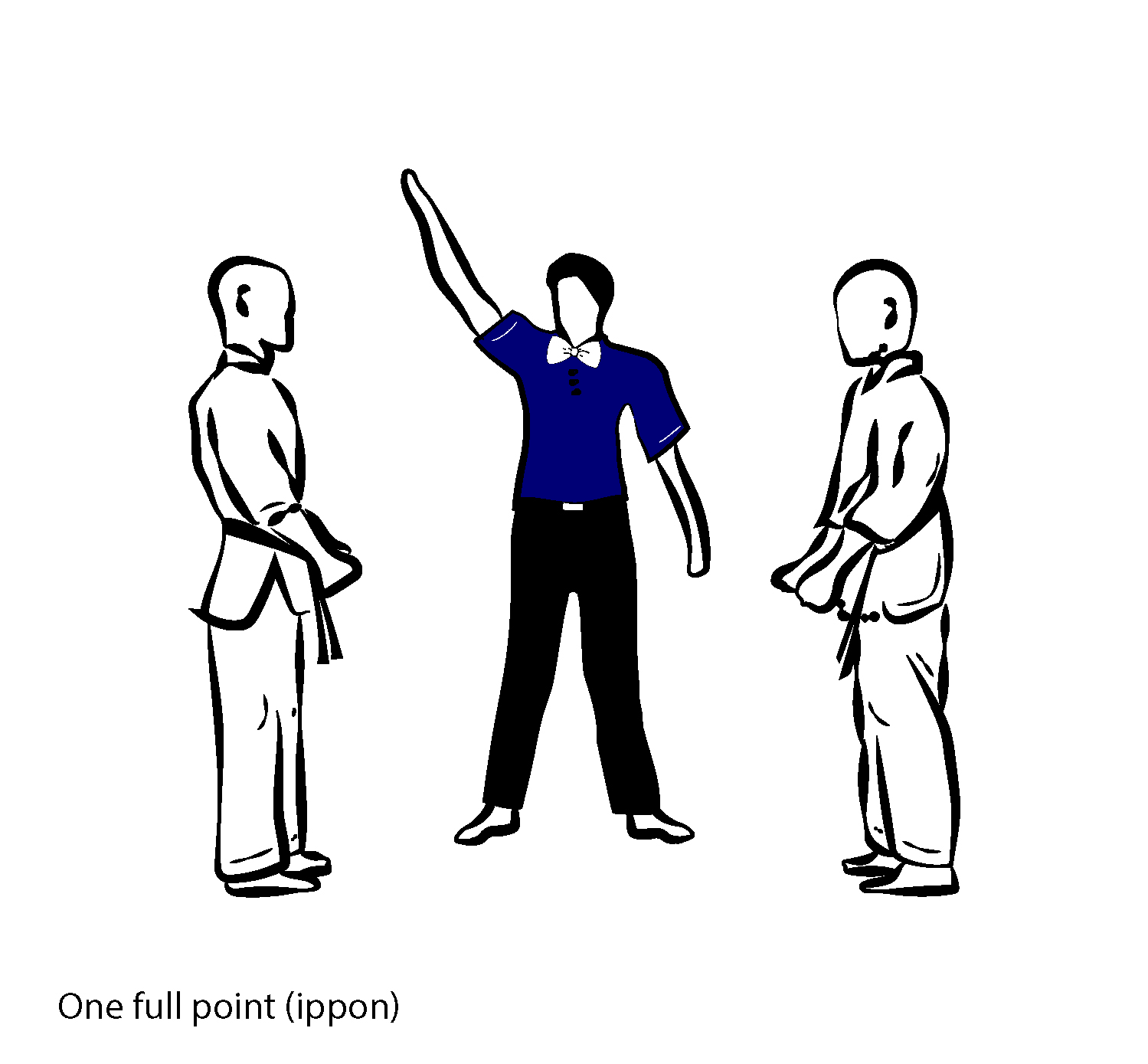
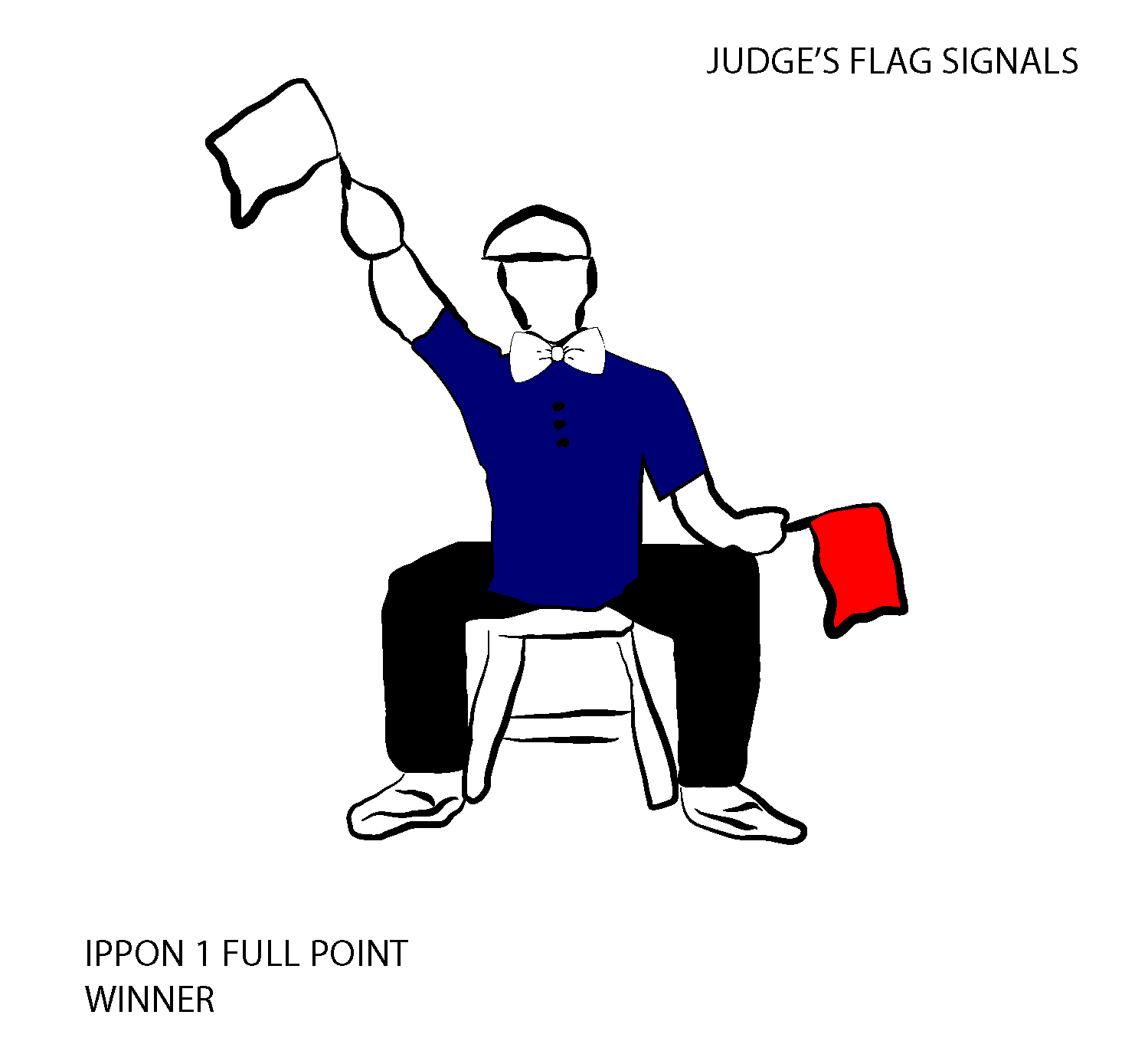
A valid technique that knocks down the
opponent and prevents them from getting back
up within the required 3 seconds.
A valid technique that leaves the opponent
unable to continue the match, at the
discretion of the center referee and the
tournament doctor.
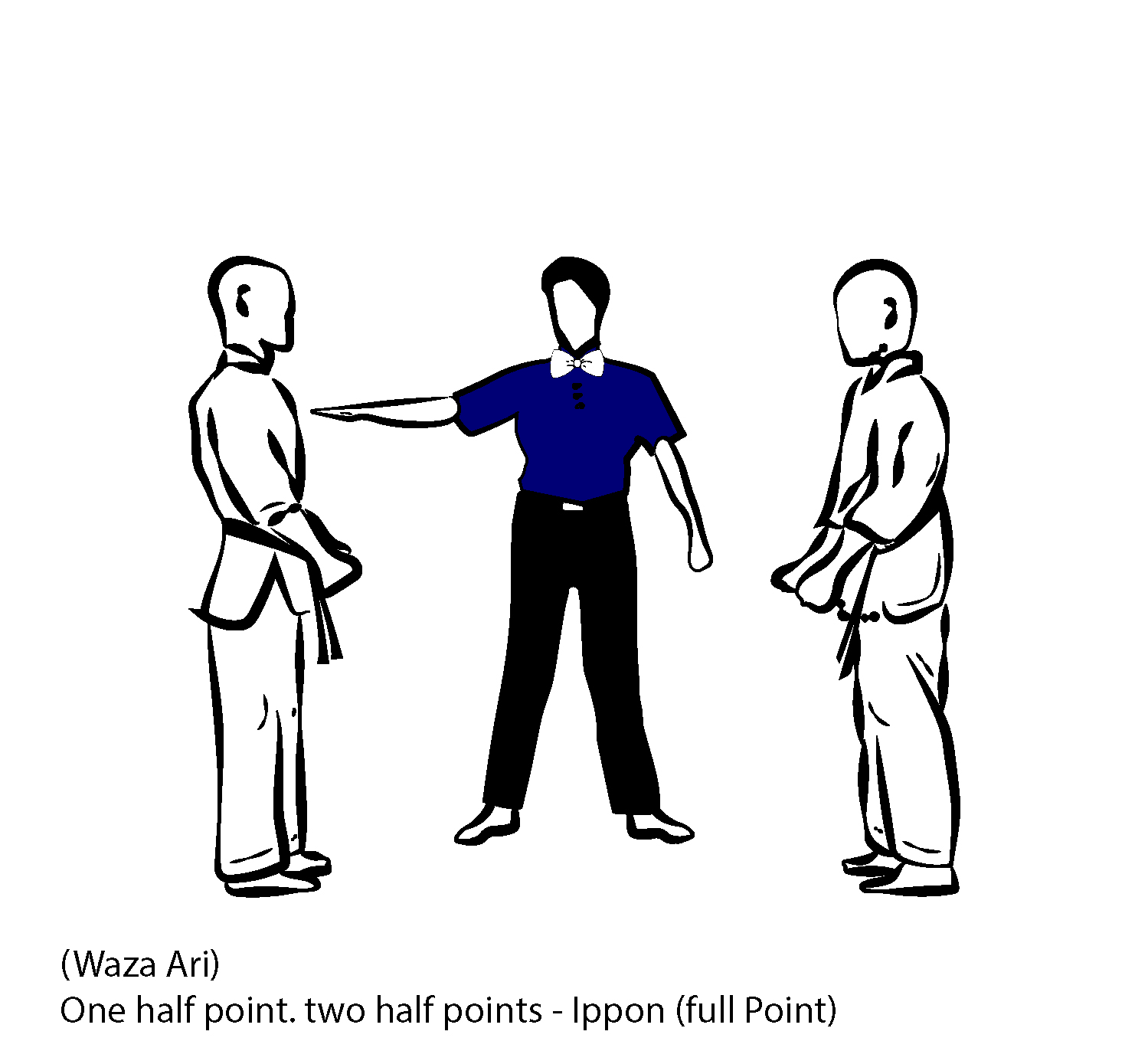
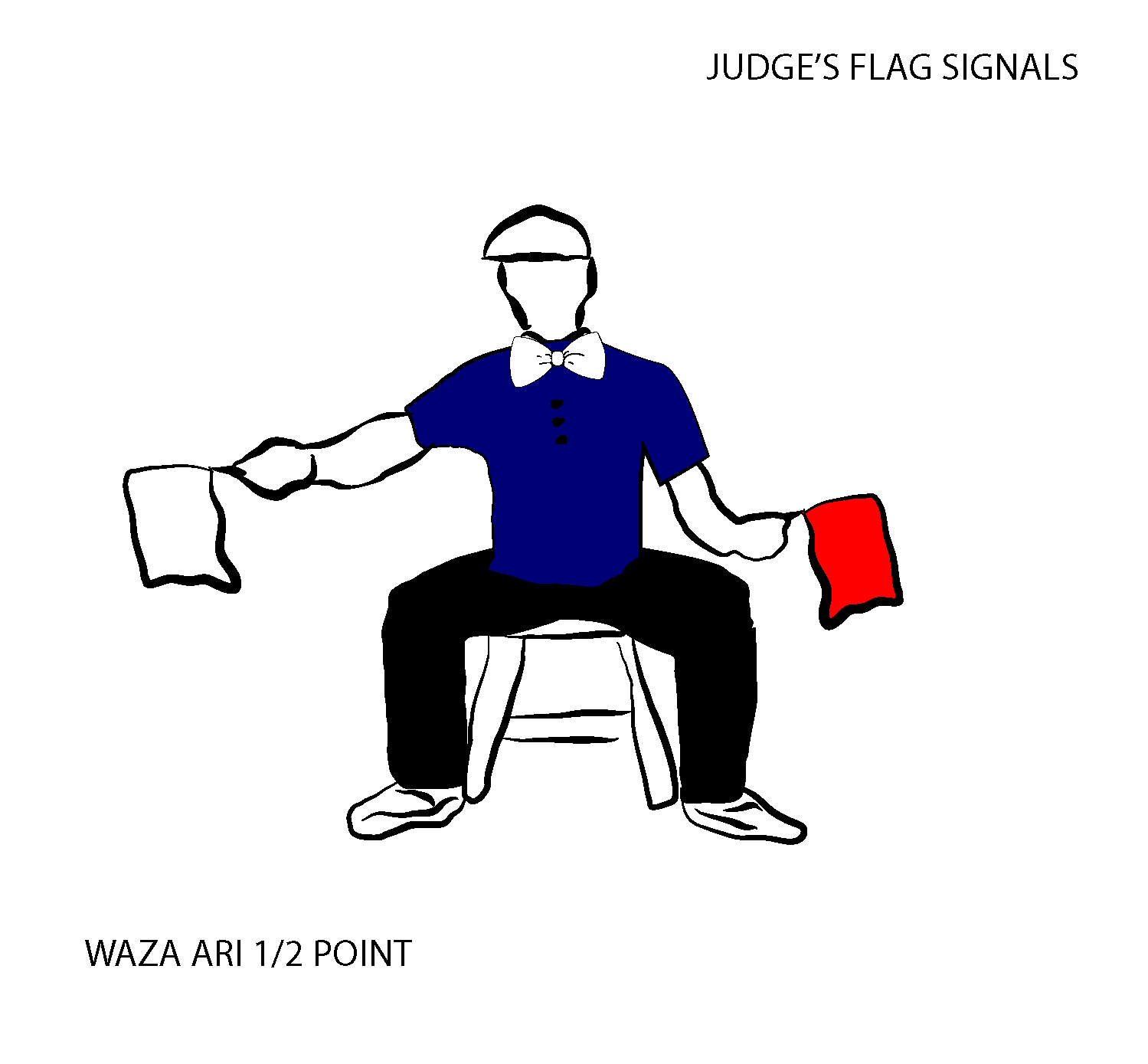
Waza-ari (Half Point)
A knockdown with recovery before the required
3 seconds.
Two Waza-ari are equivalent to one Ippon.
In the underage categories, a leg technique to
the head executed with good form, control,
and clear contact may be scored as a
Waza-ari, even if it does not produce a
visible effect on the opponent.
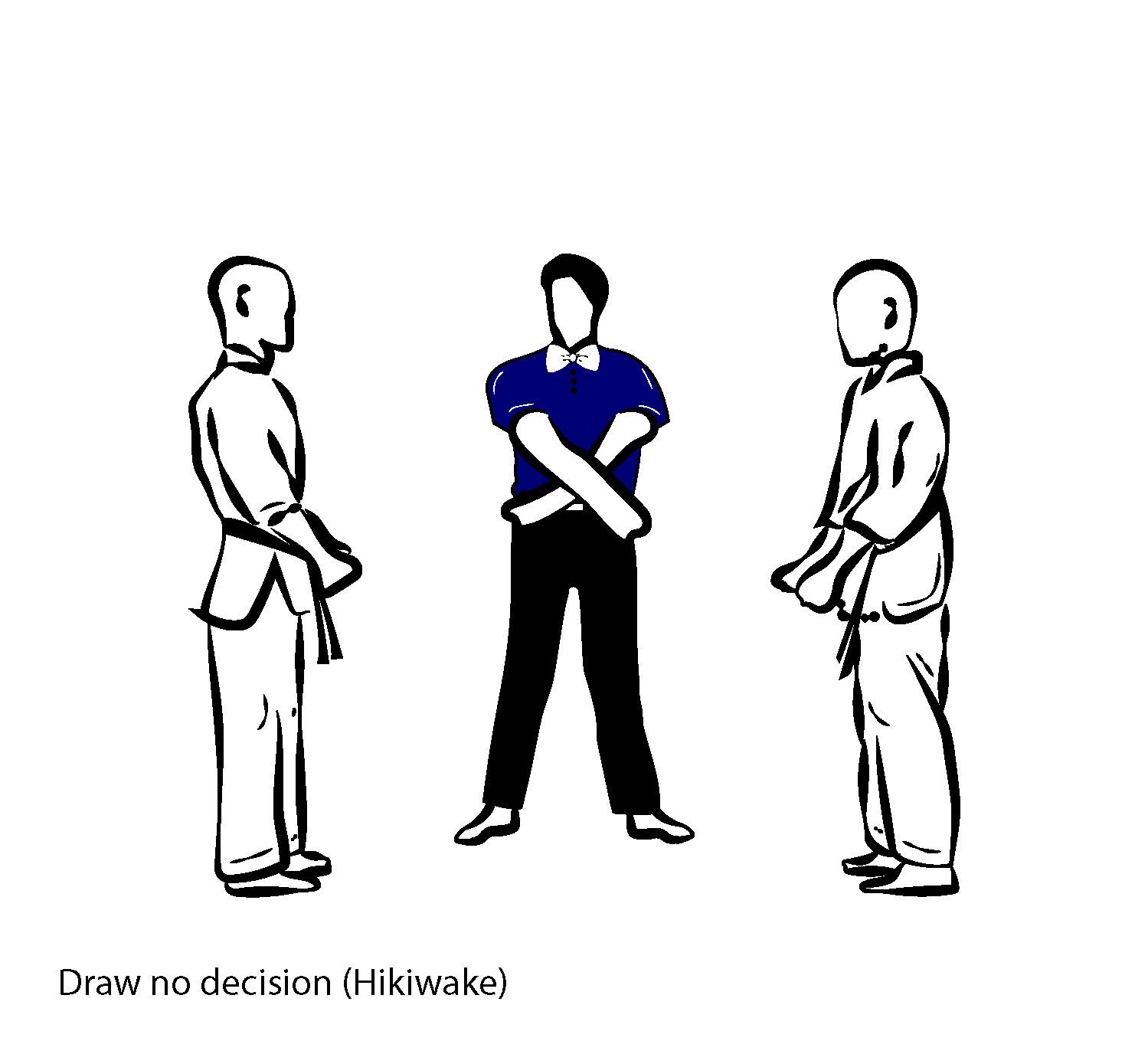
Hikiwake (Draw)
Decision Criteria
When there is no winner by Ippon or Waza-ari, the
corner judges will raise the flag corresponding
to the color of the competitor they consider the
winner, according to the following criteria:
Effective damage.
Initiative and fighting spirit.
Attitude and dynamism.
Warnings and Penalties Procedure
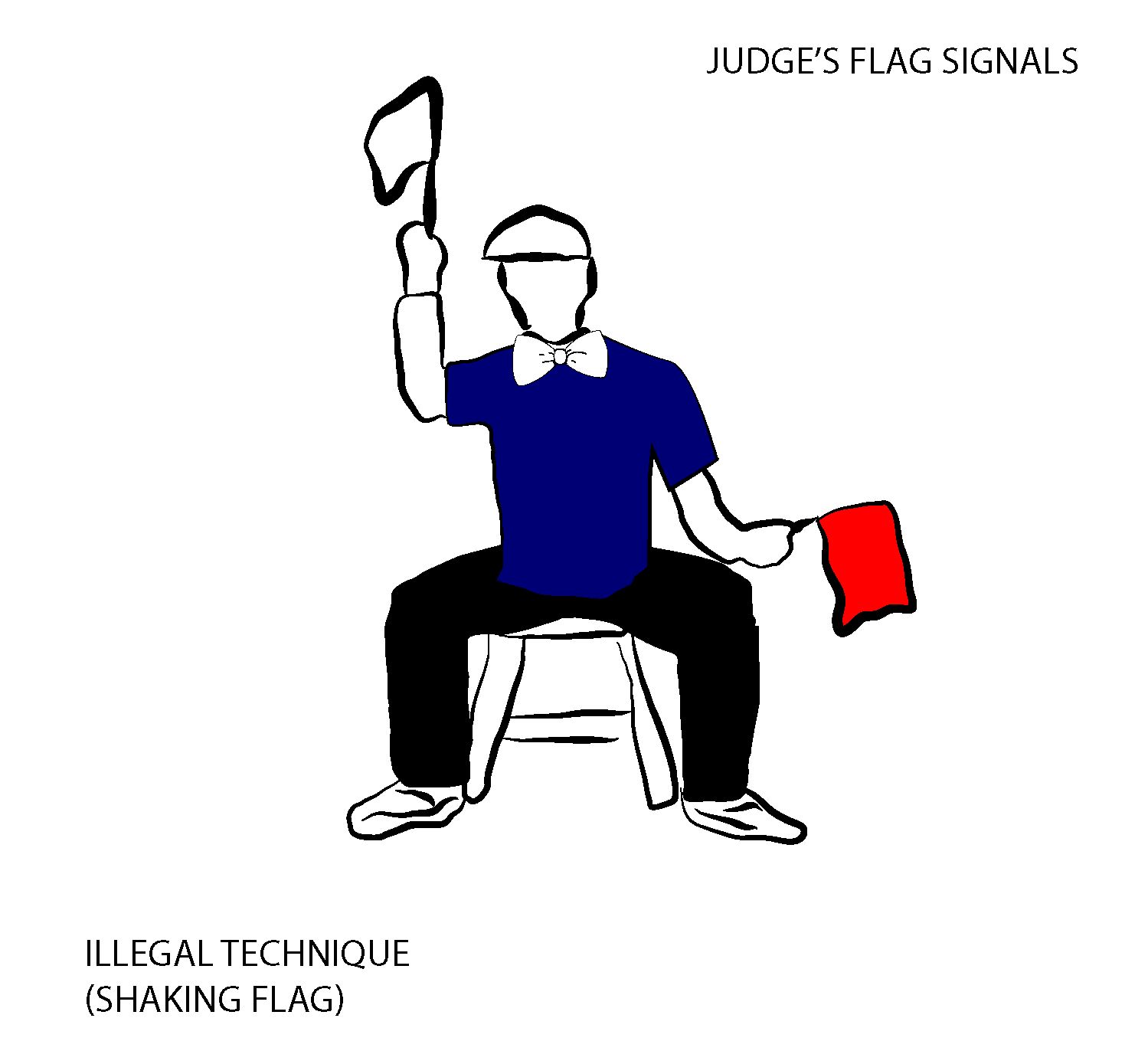
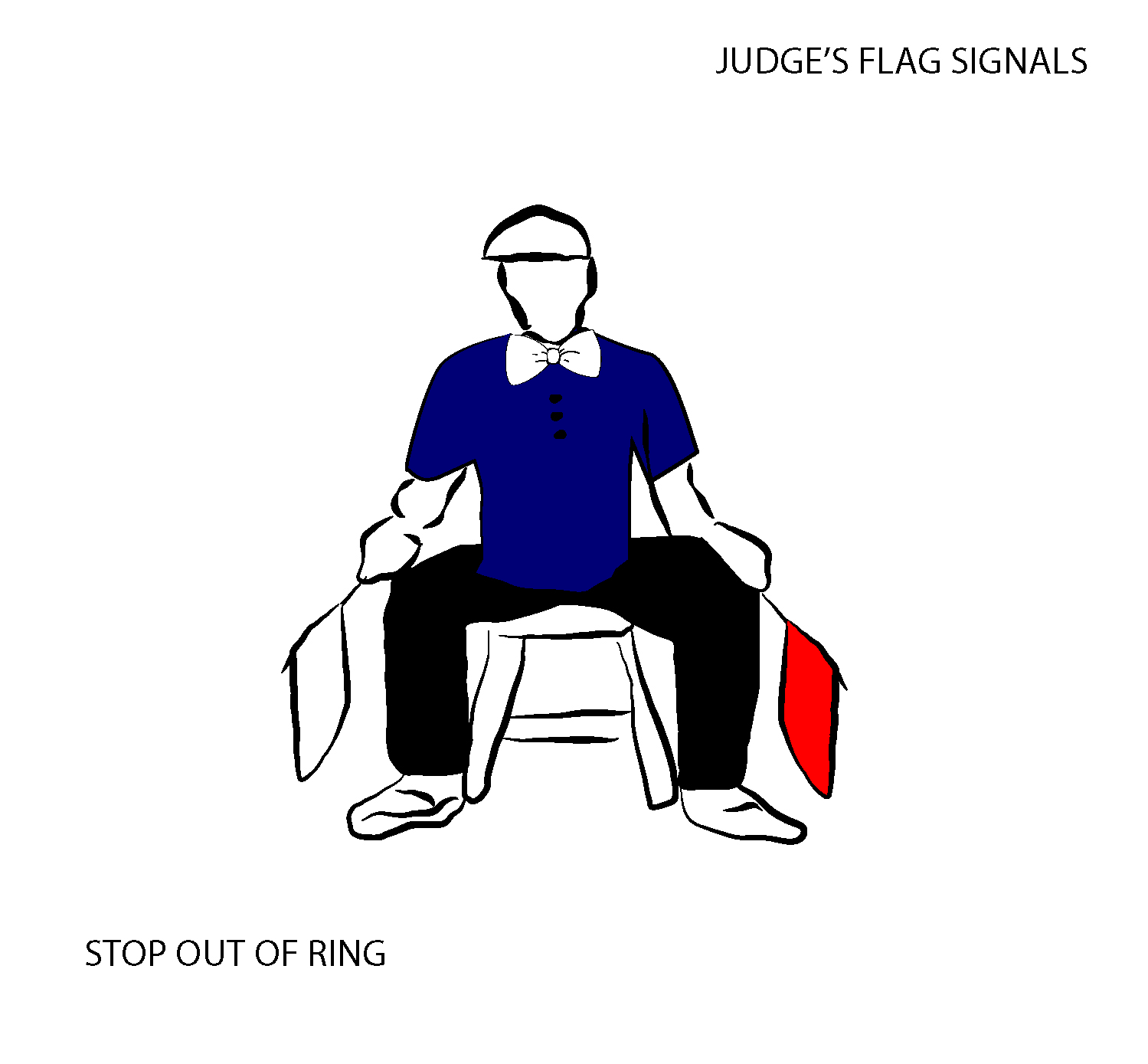
When a prohibited technique is performed, corner
judges may indicate the infraction by waving the
flag corresponding to the offender’s color and
using the whistle in short, repeated blasts.
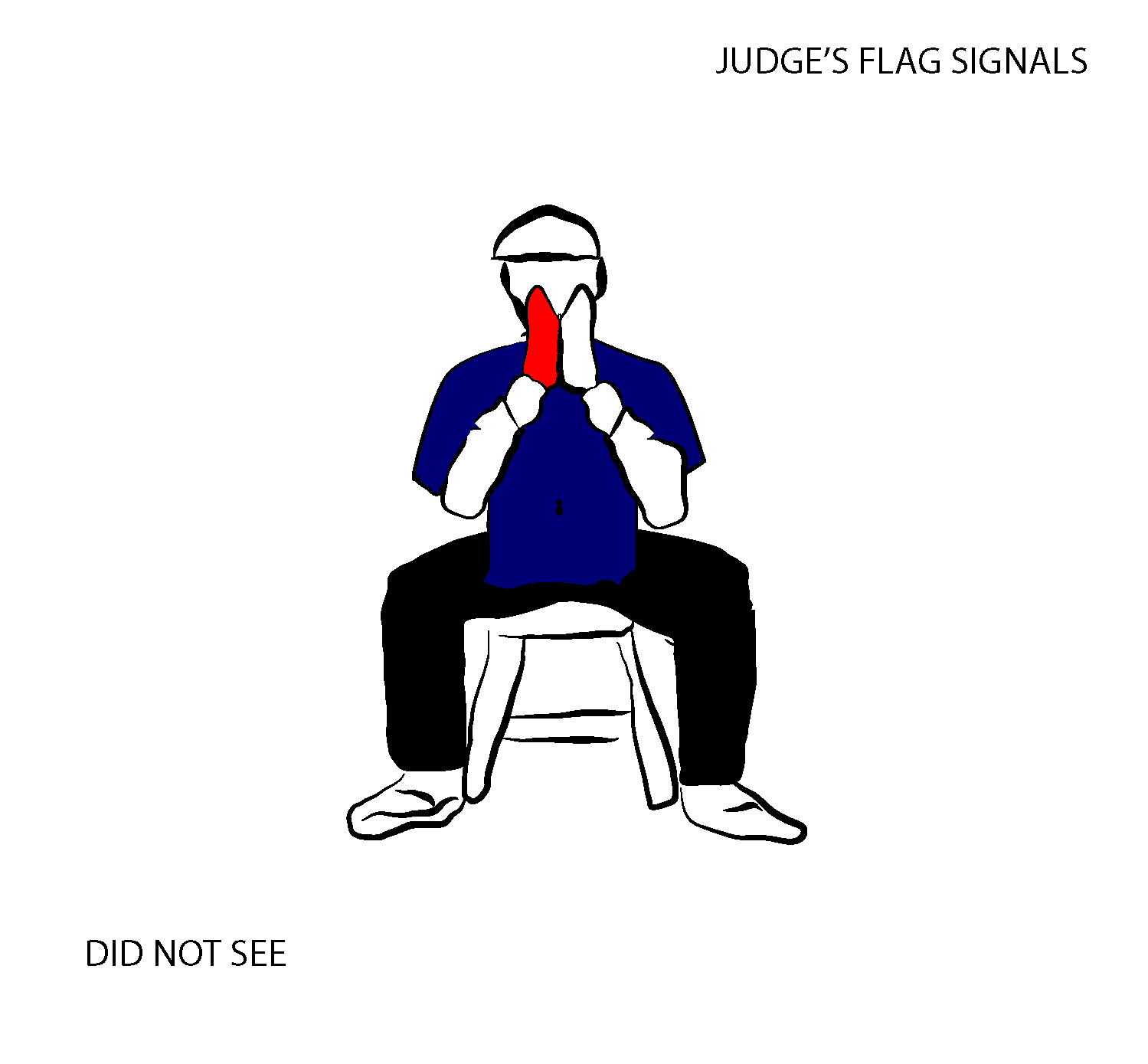
When a corner judge did not see the action, they may
indicate this by raising both flags crossed at eye
level.
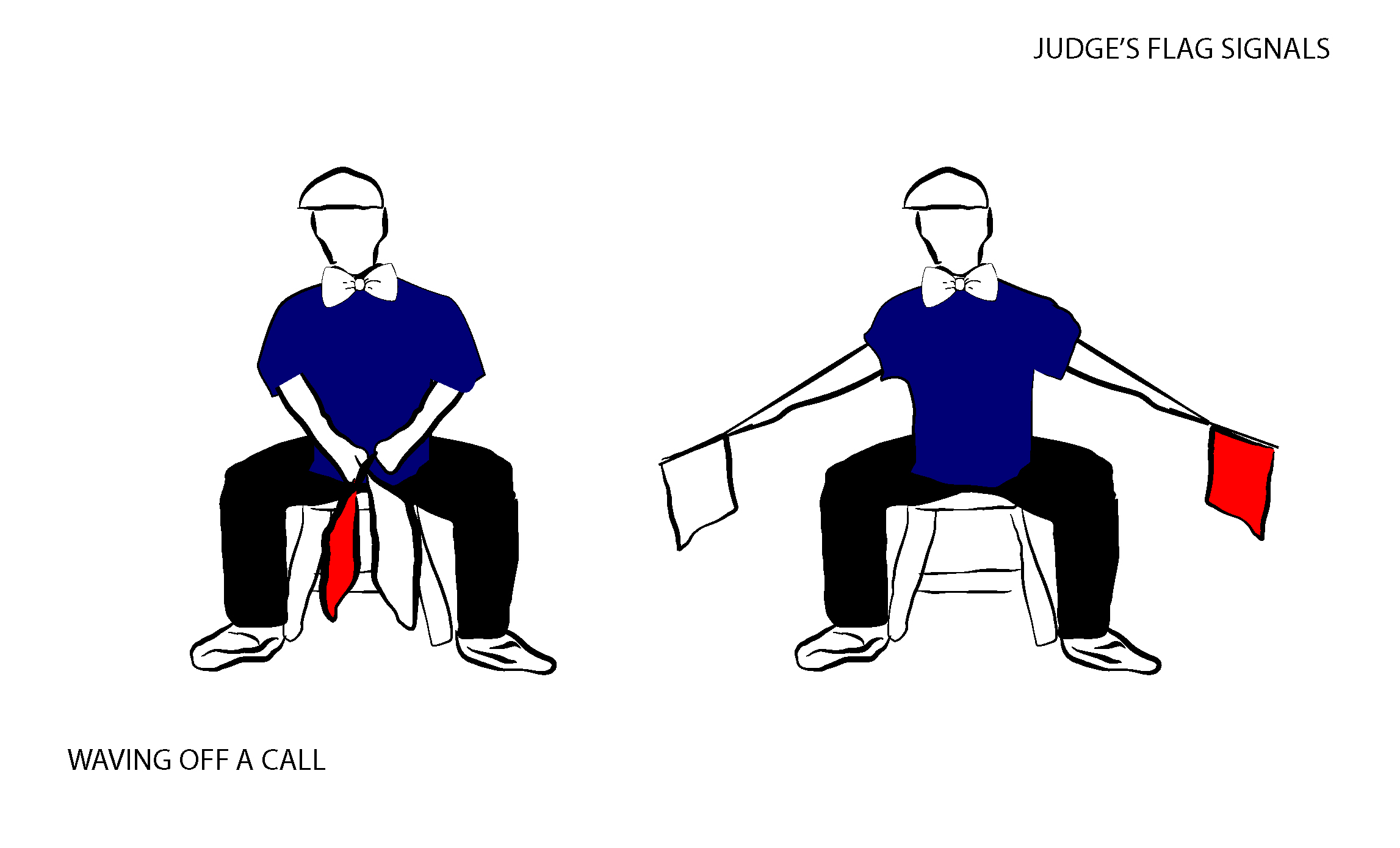
When a corner judge believes no infraction occurred,
they may indicate this by moving both flags from side
to side.
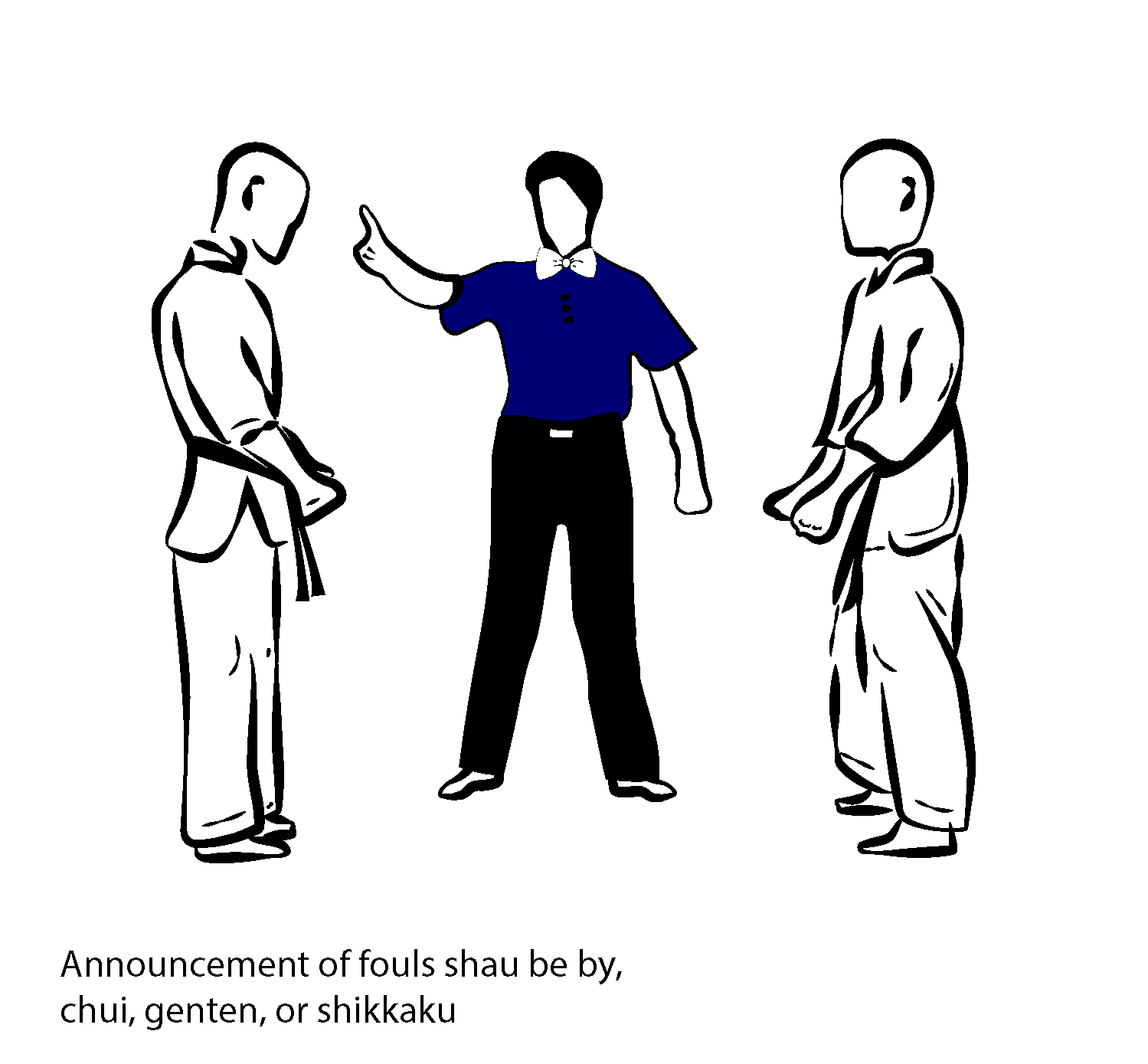
The center referee will follow this procedure to
announce warnings and penalties related to
prohibited techniques or actions:
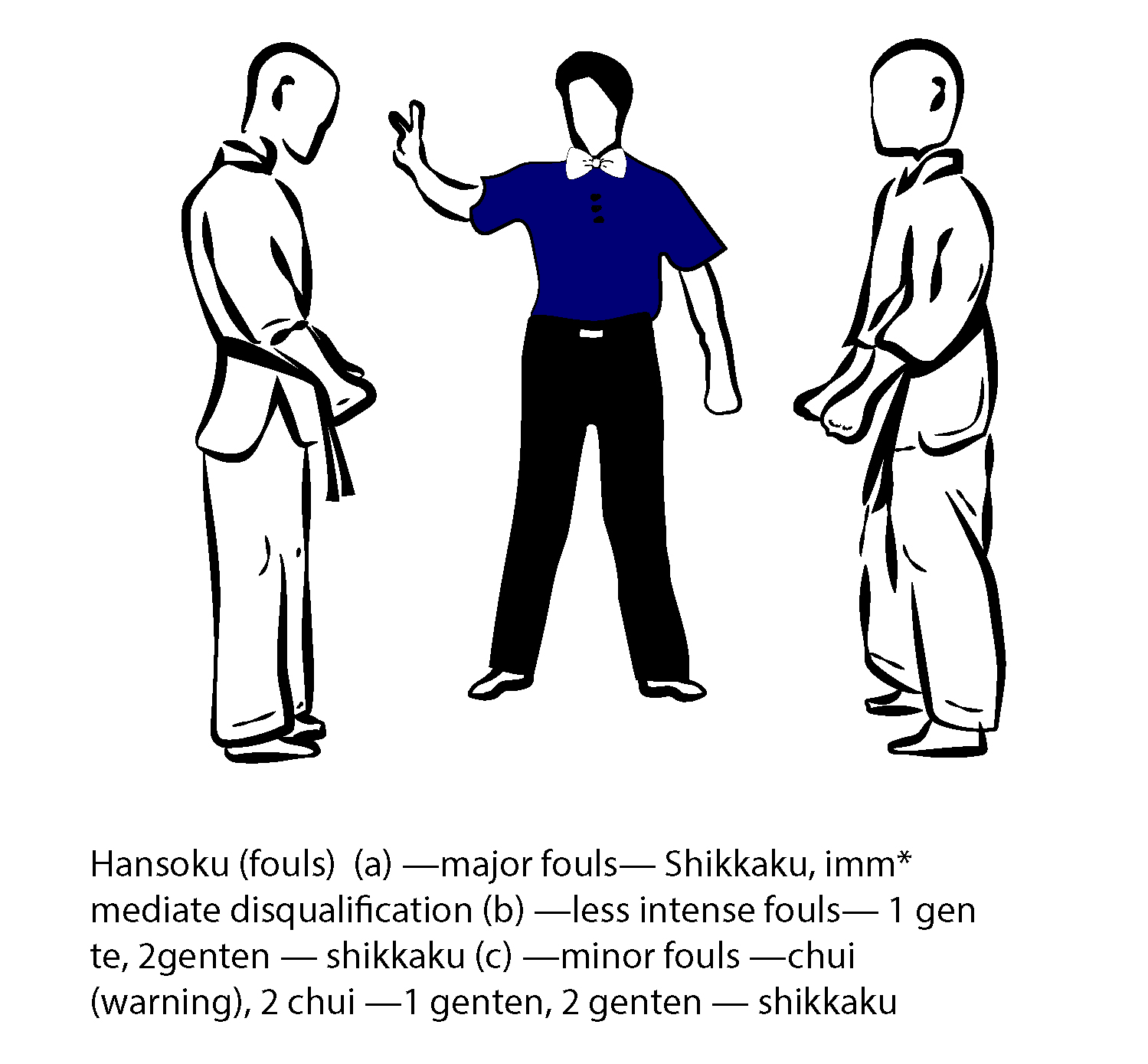
First warning:
the referee points to the offender’s chest and
announces “Chui-ichi.”
Second warning and first penalty:
the referee points to the offender’s chest and
announces “Chui-ni.” They then point to the
offender’s face and announce “Genten-ichi.”
Third warning, second penalty, and
disqualification:
the referee points to the offender’s stomach and
announces “Chui-ni.” They then point to the
offender’s face with two fingers, announce
“Awasete Genten-ni,” and finally declare
“Shikkaku.”
Infractions may result in warnings, penalties, or
disqualification, depending on the severity of the
action and the decision of the officiating team.
Serious fouls may be penalized immediately, without
the need for a prior warning.
Disqualifications
Receiving a second penalty
(Genten-ni).
Repeatedly disobeying the center referee’s
instructions.
Committing actions considered excessive violence
or intentional fouls.
Refusing to participate in the match after the
center referee has asked the competitor to
continue on three occasions.
When both competitors show unwillingness to
engage for more than 30 seconds, both may be
disqualified.
Failing to report to the combat area within one
minute of being called.