
News · August 20, 2026
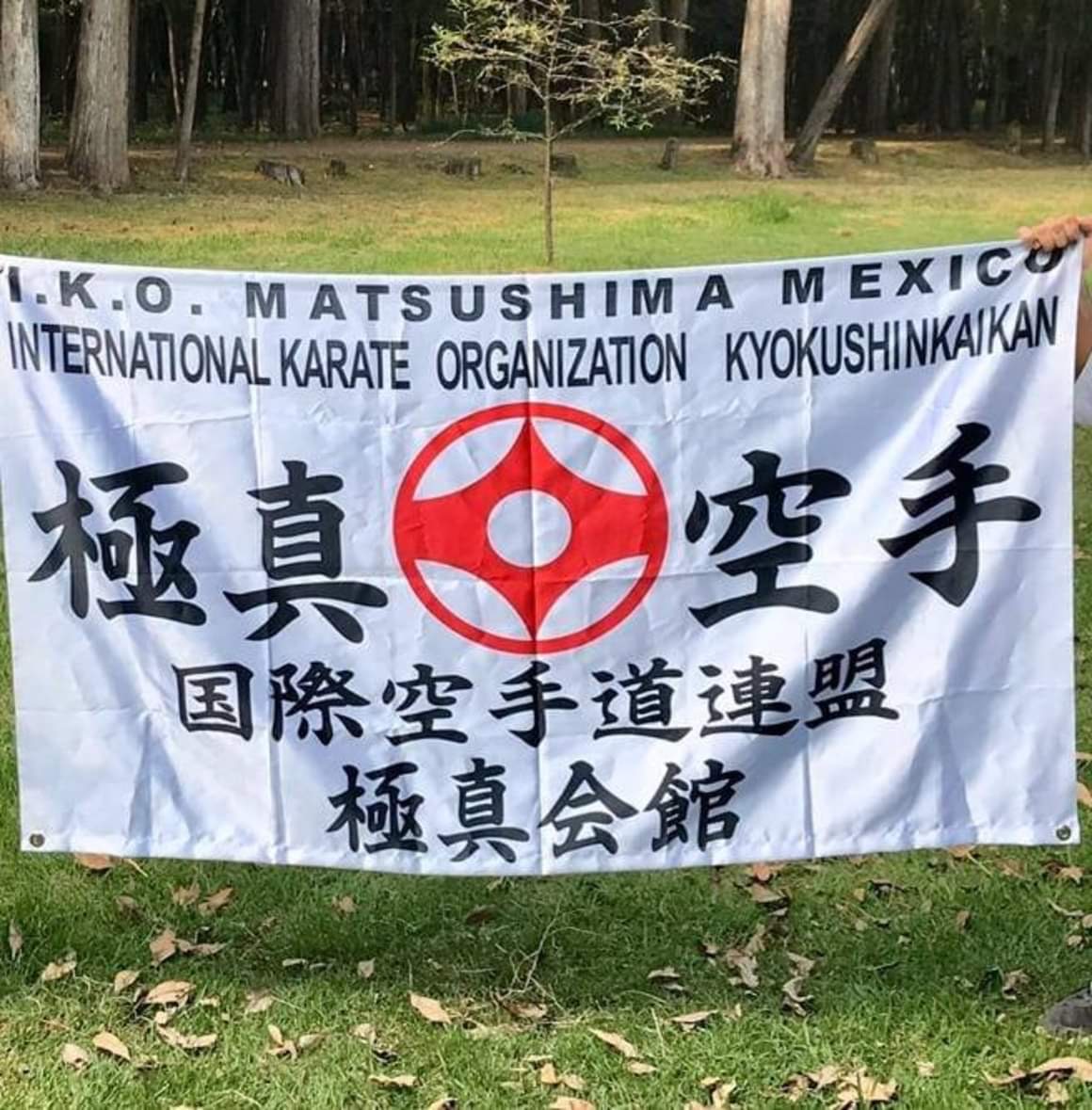
The Kyokushin legacy remains alive in the Viveros de Coyoacán
The Mexican Association of Kyokushinkai Karate Shihan Gessi Krame held a traditional training session in the Viveros de Coyoacán, one of the spaces that form part of the history and continuity of our school in Mexico City.
The practice was led by Sensei Jacobo Ramírez Chávez, president of the Association and Branch Chief of World So-Kyokushin in Mexico. Surrounded by the park’s trees, participants worked the fundamental elements of a traditional Kyokushin session: physical preparation, basic technique, movement, conditioning, breathing and kata.
Preparation for full contact
Training began with warm-up and physical conditioning. Then basic blocking, punching, kicking and knee-strike techniques were practiced.
Partner work allowed students to apply movement, defenses and attacks directed to the thighs and abdomen. Arm and body conditioning exercises prepared practitioners for the demands of full-contact kumite, always under control and with attention to technical execution.
The practice also included Ibuki, the characteristic breathing used to coordinate tension, concentration and movement. The session concluded with kata, integrating posture, rhythm, technique and breath control.
A complete training structure
Sensei Jacobo Ramírez explained that the session gathered the essential structure of traditional Kyokushin: static and moving technique, combinations, impact strengthening and form.
Full contact requires aerobic endurance and physical preparation, but its purpose does not end with the hardness of combat. Concentration, discipline, resilience and mental strength are built gradually through constant training.
This combination of physical demand and inner formation remains one of the central traits of the teaching transmitted by Sosai Masutatsu Oyama and by his direct student, Shihan Gessi Krame.
The “Green Dojo”
The Viveros de Coyoacán occupy a special place in the Association’s history. When the school lost permanent practice spaces, this outdoor setting made it possible to keep training going. Over time, practitioners came to know the place as the Green Dojo.
Today the Association holds activities in different parts of the metropolitan area and the country. Training in Viveros recalls that a dojo is not defined only by its walls, but by the seriousness of practice, the relationship between teacher and students and the commitment to preserve the path.
Looking to the future from the lineage
The practice took place in an especially significant year, within the commemoration of fifty years since Shihan Gessi Krame’s Kyokushin arrived in Mexico.
The continuity of this legacy is expressed today in regular training, the formation of new practitioners, collaboration with other groups and the preparation of national and international gatherings.
Each session in Viveros joins two moments of our history: the years when training there was a form of resistance, and the present, in which the Green Dojo remains a living space for transmitting Kyokushin to a new generation.
Editorial adaptation for So-Kyokushin Mexico, based on the coverage published by Sendero Artes Marciales on August 20, 2026.
View all news →